Three Ways Learning to Draw Changed my Life
I’ve written about how writing saved my life, and now, on my five year anniversary of deciding to learn to draw, I want to share how drawing has completely altered the way I see the world, do my work, and live my life.
1. The drawing practice continuously opens my mind to new ways of thinking and seeing.
Learning to draw changed my way of seeing. At the same time, this process of learning to see never ends. Just today, I was taking a drawing class taught by Anita Lehmann where I was learning how to think about light and shadow when I draw. As a result, I found myself looking out the window at the trees and houses, staring curiously at the shadows. I hadn’t thought about the length of the shadows as the sun moves, or how bringing shadows into my drawing helps to unify the objects.
2. Learning to draw taught me to appreciate the many steps that a project may require.
And by project, I’m thinking about the work that goes into designing a course, or the work of creating a new intranet. These are multi-step processes that require time, research, feedback from other people, and much iteration. I used to dislike multi-step processes. I was impatient and preferred doing work that I could accomplishes in one go.
One of the ways that drawing and painting have helped me develop appreciation for multi-step projects is through the practice of layering.
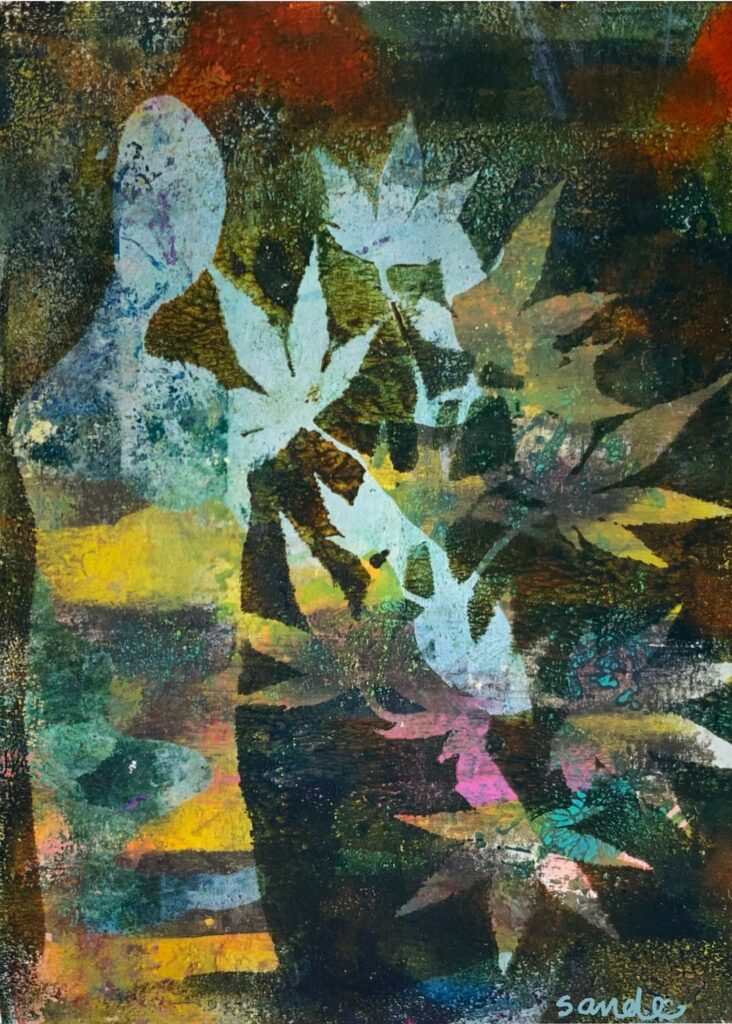
I started learning to make backgrounds – either with watercolor or through painting on a Gelli plate and then pulling the prints. That was layer one. Layer two might be random marks or collage made from painted or found papers. Layer three might be a face or flowers that I draw, followed by paint to cover up some of the background so that my drawings really stand out. And then, when I stop, pause, and look at the painting, I might notice it asking for a word or a series of words.
This practice of layering helps me to see that something beautiful isn’t created all at one time. I do a layer, stop, move to something else, then come back and add another layer. The complexity and interest of the piece evolves over time.
I see that with my work too. When I’m working on a long-term project, I know that there are going to be multiple steps before it’s done. Sometimes, when I feel impatient, I ask myself how I can approach a project like I approach my art – in layers.
I’ll get something down on the page, or call a meeting, and then go back and make the necessary additions, changes and corrections, all while appreciating the iterative nature of getting a big project done as similar to making a multi-layered piece of art.
3. Learning to draw taught me to reduce judgement and evaluation of the final product and focus instead on the process.
Drawing is a dynamic process of discovery. I enjoy the meditative state I can enter when I just focus on what I see in front of me, allowing my hand and pen to create lines on the page by slowly following the contours of what I see. I’ve learned to spend time looking, and get lost in what I’m drawing, rather than glancing repeatedly down at the page and judging what emerges.
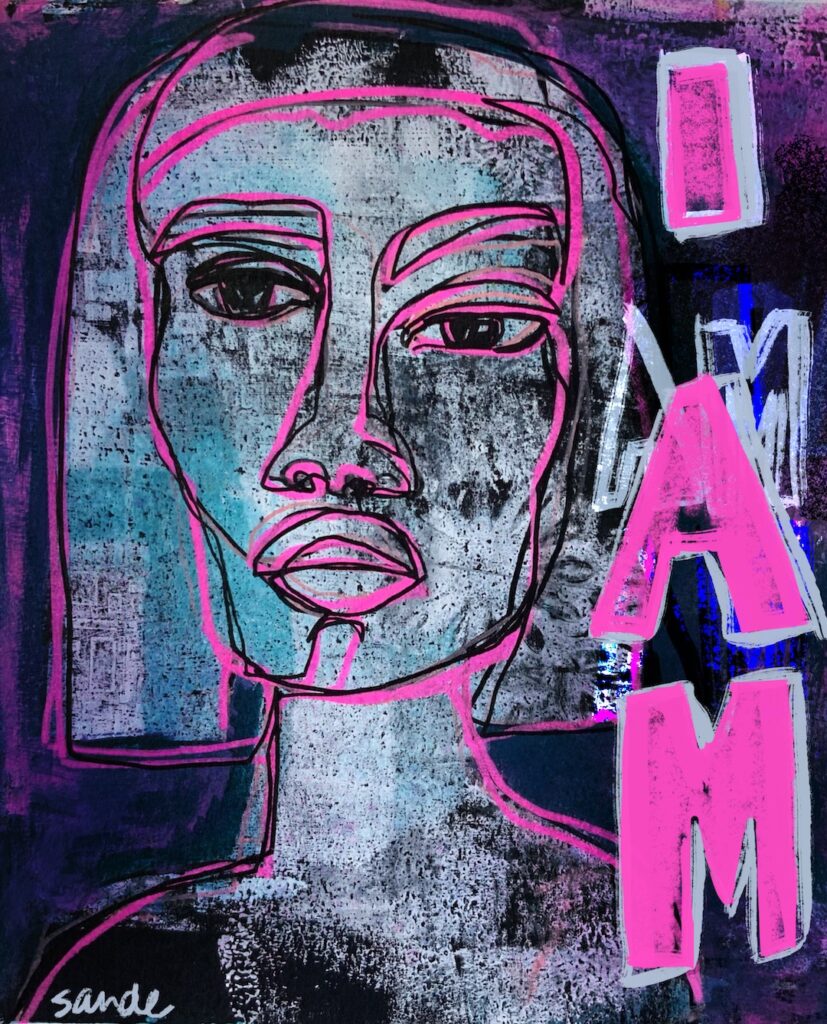
Drawing and painting is an amazing process of watching something appear where there was a blank page and then exploring the interplay between what appears and the thoughts and connections still emerging.
Learning to draw has built my visual competence and that has had far-reaching effects in every area of my life.
I started out with just an interest in deepening my visual thinking and gaining an ability to replicate what I see. In the process I’ve discovered a passion that touches and makes more meaningful and beautiful every area of my life.
Want to try it? Here are five steps to help you get started.