The other day I was teaching a couple of drawing techniques and practices. During the session, one of the participants said ooh, look at that color, how intense it is, I love it. Delight and wonder filled her voice. YES, I said, keep playing with that color, moving it around, adding more pigment, more water.
By playing with your materials, you get to see what you love! And by seeing what you love, you get to develop your style.
Yes, you can learn from other people. You can follow their directions and try out their techniques. But it’s when you play, asking yourself, “what would happen if I . . .”, and then you take a look at what you’ve created, noticing what interests you, and excites you . . . that’s the key to finding your way of doing things. That’s the key to finding your unique style.
In the days after the shootings in Atlanta, in which 8 people were killed — 6 of them Asian women — I worked with my team at The California Wellness Foundation to express our sorrow, outrage and solidarity with the Asian American and Pacific Islander community.
One of the things that I appreciate about my work at Cal Wellness is that I am at an organization that is committed to using money and voice to help communities to be healthier, stronger, more resilient, more joyful in California. Especially communities of color. Here is our statement and an op-ed written by one of our board members, Geri Yang-Johnson, expressing her perspective on the killings and anti-Asian violence.
In my work as a communications professional, I’ve learned that writing and voice don’t develop in a vacuum.
While I value the writing I do for myself, over the years, I have also developed my muscle and capacity to write on behalf of and in service to others. In doing so, I listen, I ask questions, I write, I receive feedback on what I’ve written, then I revise. Through this process, I learn, I grow and I have even more to give.
We weren’t the only foundation raising our voice in solidarity with our Asian brothers and sisters. The Communications Network, an organization that provides support to communications professionals advancing the common good and social justice, has gathered the statements of many foundations in response to the violence. You can read them here.
In the aftermath of deeply troubling events, I often find myself without words.
I may be furious, deeply saddened, profoundly shaken, just wanting to SCREAM!! No, this is wrong. No, not again. WHY?!!
If my words are caught in my gut, my heart, my throat, I find it helps so much to turn to the words of others. To read history, to listen to arguments and explanations.
I read them, listen, and notice where the words land in my gut, how they resonate in my heart. I pay attention to where they meet the scream, interrogating what they’ve said, or nodding in recognition, my own words loosen, begin to flow. And then, I free write, or mind map in response, continuing the conversation – calling for justice, solidarity, care, generosity, respect, humanity, love made into action.
Here are some other resources that I’ve been finding helpful as I’ve begun deepening my own learning about the challenges facing Asian Americans, and actions we can take to make a difference:
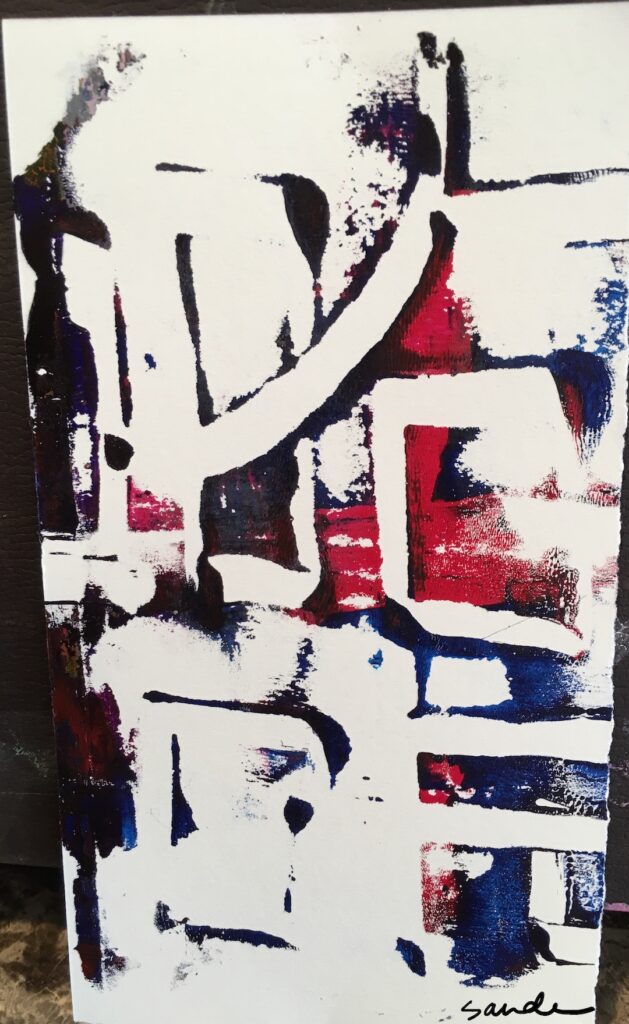
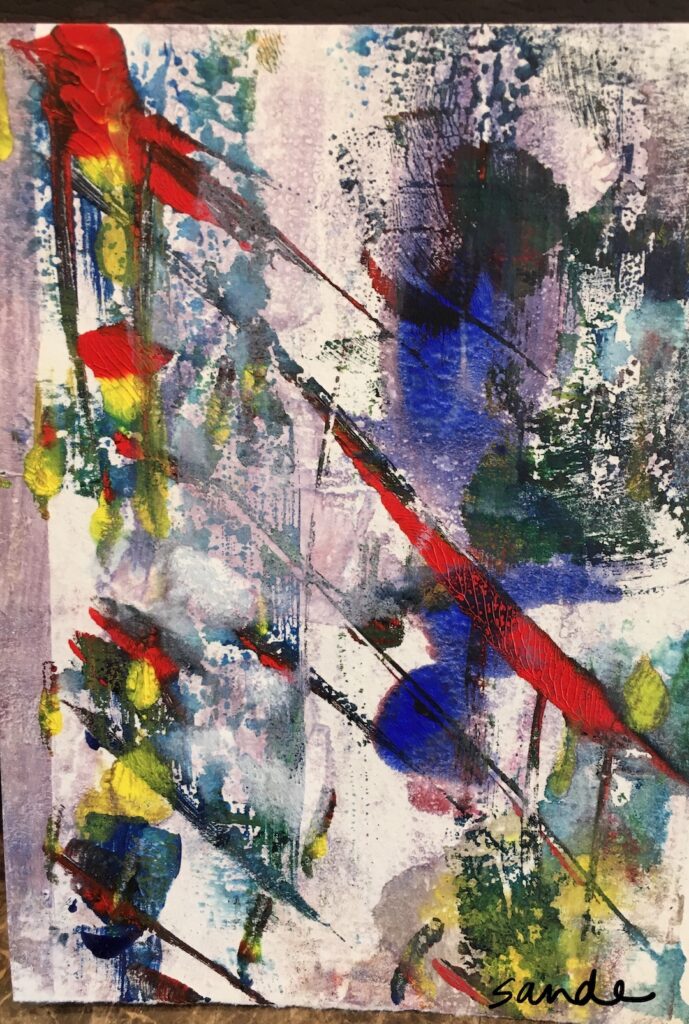
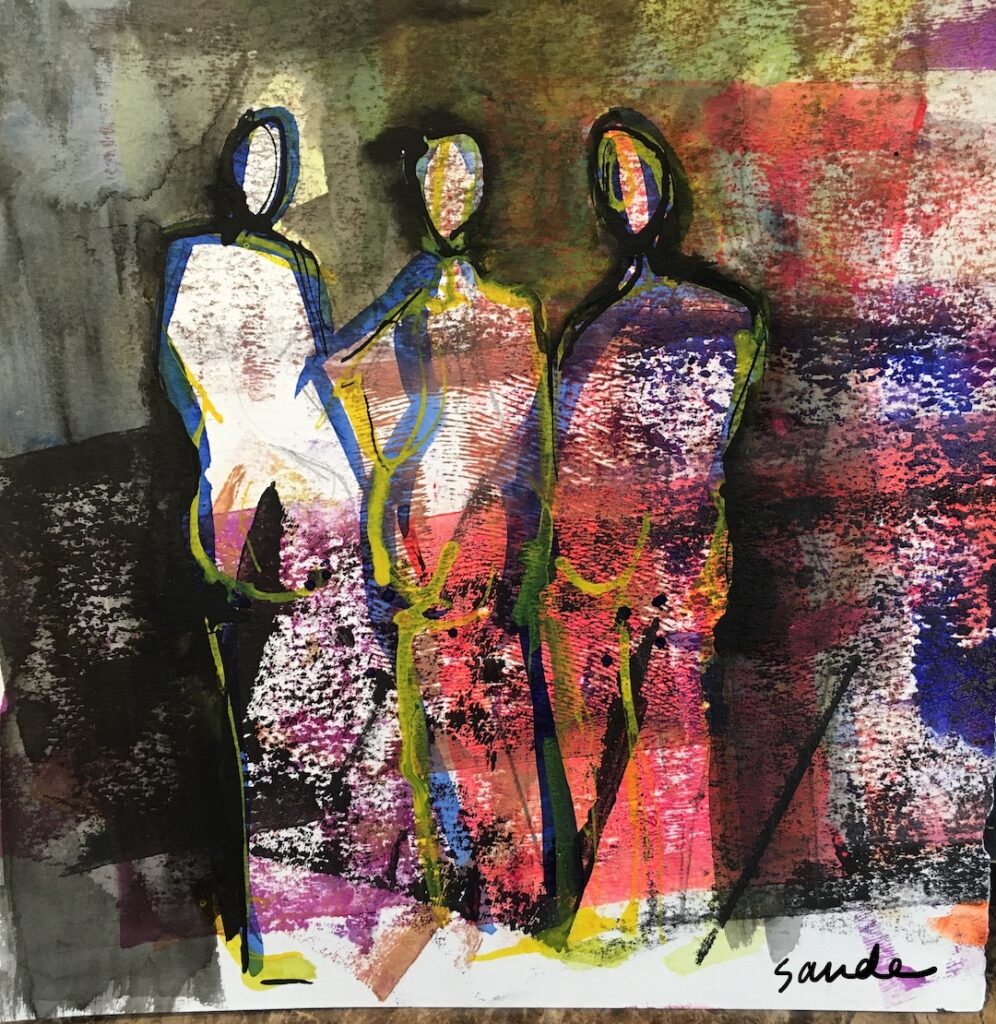
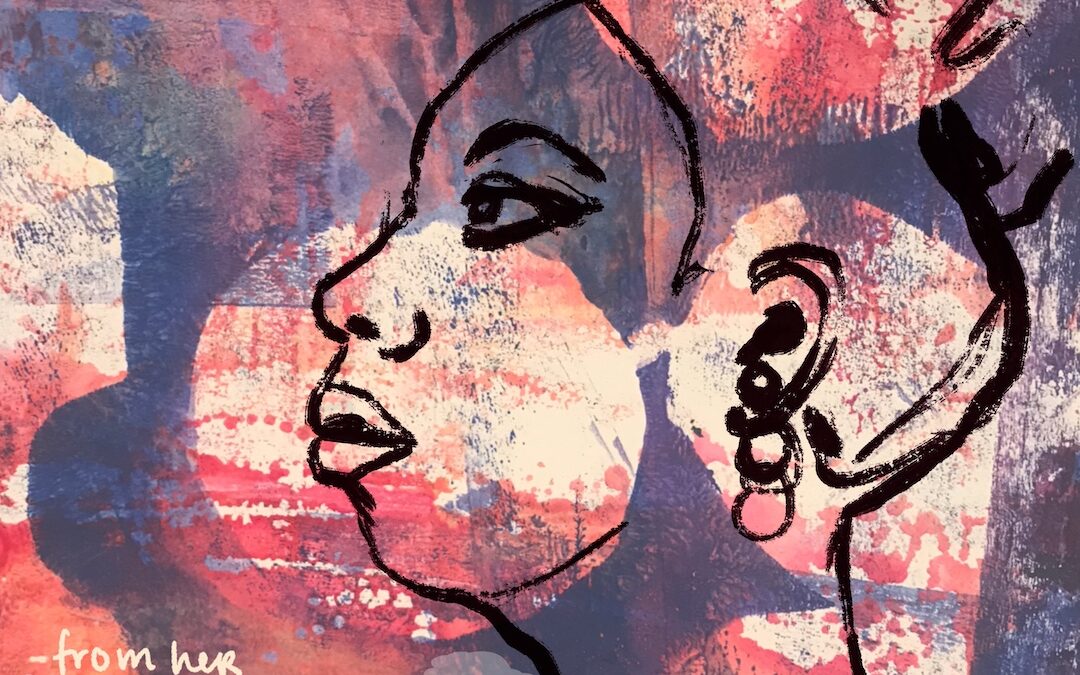
The past few weeks, I’ve been experimenting with gelli plates, acrylic paints and pan pastels. When I first started, I was just rolling out the color with a brayer and pulling the prints. But then I started to play with layering stencils and acrylic paints. First it was stencils I bought and then stencils I made from cardstock.
When I learned that pan pastels work well on the gelli plate, I started rubbing the soft chalky pastel through stencils, rolling on acrylic gesso or matte medium, and then pulling those prints. Here’s a video that shows you how to use the pan pastels with the gelli plate.
After a while, I started using paintbrushes to paint patterns directly on to the plate and pulling those.
Once I made the prints, I’d look at them to see what more they wanted. Many times, the prints have become colorful, intricate multi-dimensional backgrounds, although I’m also exploring creating prints that are final art. The possibilities are endless.
How often do we hear the expression “if you can’t see it, you can’t be it?”
In her film, How it Feels to Be Free, Yoruba Ritchen shows how six Black entertainers saw themselves as free, powerful, liberated women long before society – and Hollywood – shared their view.
By seeing themselves as free, and centering that belief in their performances, deeds and words, they helped to remake society’s view of Black women.
Ritchen tells the stories of Nina Simone, Abbey Lincoln, Pam Grier, Diahann Carrol, Lena Horne and Cicely Tyson. She shows how each of these women stood up against Hollywood’s history of racist depictions of Black people.
Lena Horne had a contract in which she insisted that she would not play maids – which meant that Hollywood didn’t know what to do with her.
Cicely Tyson was one of the first Black women to wear her hair un-straightened on TV and only accepted roles that depicted Black people with dignity and respect.
Diahann Carroll played Julia, a middle-class nurse raising her son after her husband’s death, and brought a new vision of the power and strength of Black women into Black and White households.
Abbey Lincoln reinvented herself from a glamourous pin-up to a powerful, Afro-wearing jazz singer naming, singing, and speaking about the international struggle of Black people.
Nina Simone wrote songs and told stories of deeds of terror against Black people in songs such as Mississippi Goddamn.
And Pam Grier played a death-defying super bada** woman – further extending and defying notions of Black womanhood.
All of these women experienced backlash as a result of their bravery, boldness and principles.
They often didn’t have work for years at a time. But rather than focus on the tragedy of their stories, filmmaker Yoruba Ritchen explains that her goal was to share the importance of these women to our culture, politics and lives.
Check out the trailer here. The film is available on PBS with membership and on Amazon Prime.
You can watch an interview between director Yoruba Ritchen and Cornelius Moore here. The program is presented by the Museum of the African Diaspora Film Club.
And the book that inspired Yoruba Ritchen, How It Feels to Be Free, Black Women Entertainers and the Civil Rights Movement, by Ruth Feldstein is here.
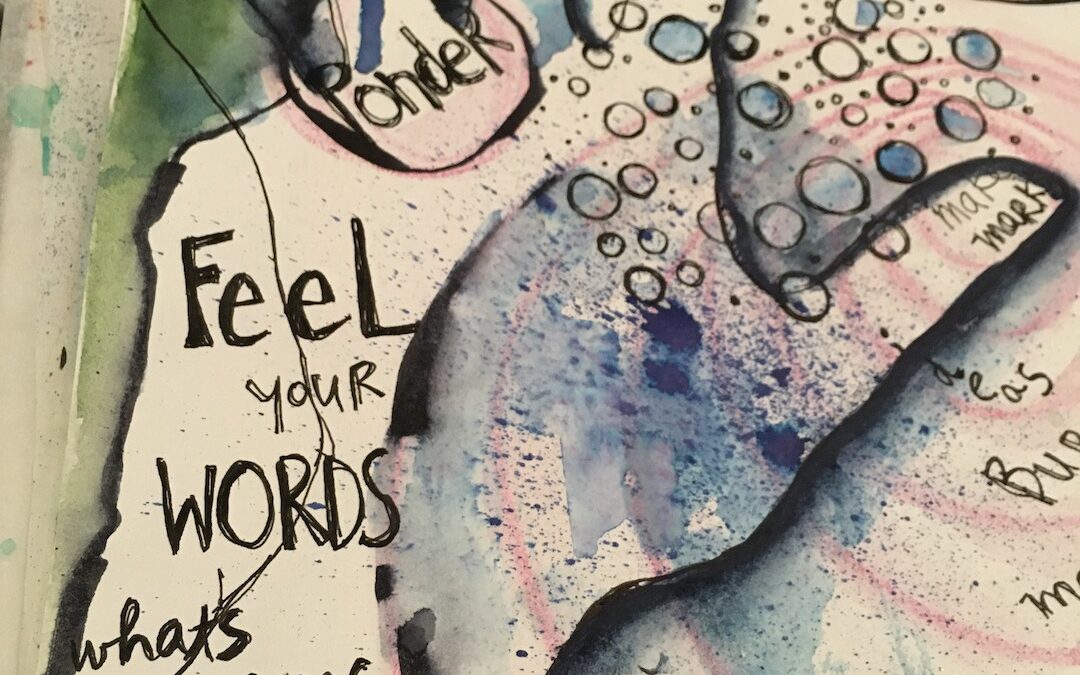
Over the course of two days, we turned our journals into playgrounds waiting to reveal mysteries.
We started our pages by painting messy backgrounds using watercolor pencils and paints. Eric encouraged us to start at least 10 spreads that we would then work on throughout the workshop.
Then we free wrote in response to the prompt, “I believe 2020 . . . ” We also free wrote about what we wanted to see and be in 2021. (Free writing means setting a timer and just letting the words emerge, not stopping until the timer rings.)
We wrote on tracing paper, and 3 X 5 cards. We wrote directly in our journals. We drew mind maps, then drew marks of any sort — circles, triangles, lines, it didn’t matter what — slowly, mindfully across the page. We cut up junk mail and ephemera from our lives then glued it into our journals.
Throughout the day, we painted, wrote, drew and glued, willingly not knowing where we were going or where we would end up.
At the beginning of the class, Eric encouraged us to enter into the appropriate mindset of curiosity for this strange journey by remaining open to non-resistance, non-judgement, non-attachment.
One of the things that I noticed throughout the two days was the power of “not knowing” as we worked on our pages. This is not a linear process in which you finish one page, then go on to the next. Rather, you’re writing and drawing in response to your intuitive voice – heeding what would be interesting, what would be fun, heeding what if?
This practice requires setting aside judgement, a beautiful practice for life outside the journal. No need to keep asking yourself, “What is this?”, “Why am I drawing this?”, “Where is this going?” Instead, I gently encouraged judgement to go off and sit quietly while I played in my journal.
The result?
A powerful understanding that making space for not knowing allows meaning and knowledge to emerge.