How often do we hear the expression “if you can’t see it, you can’t be it?”
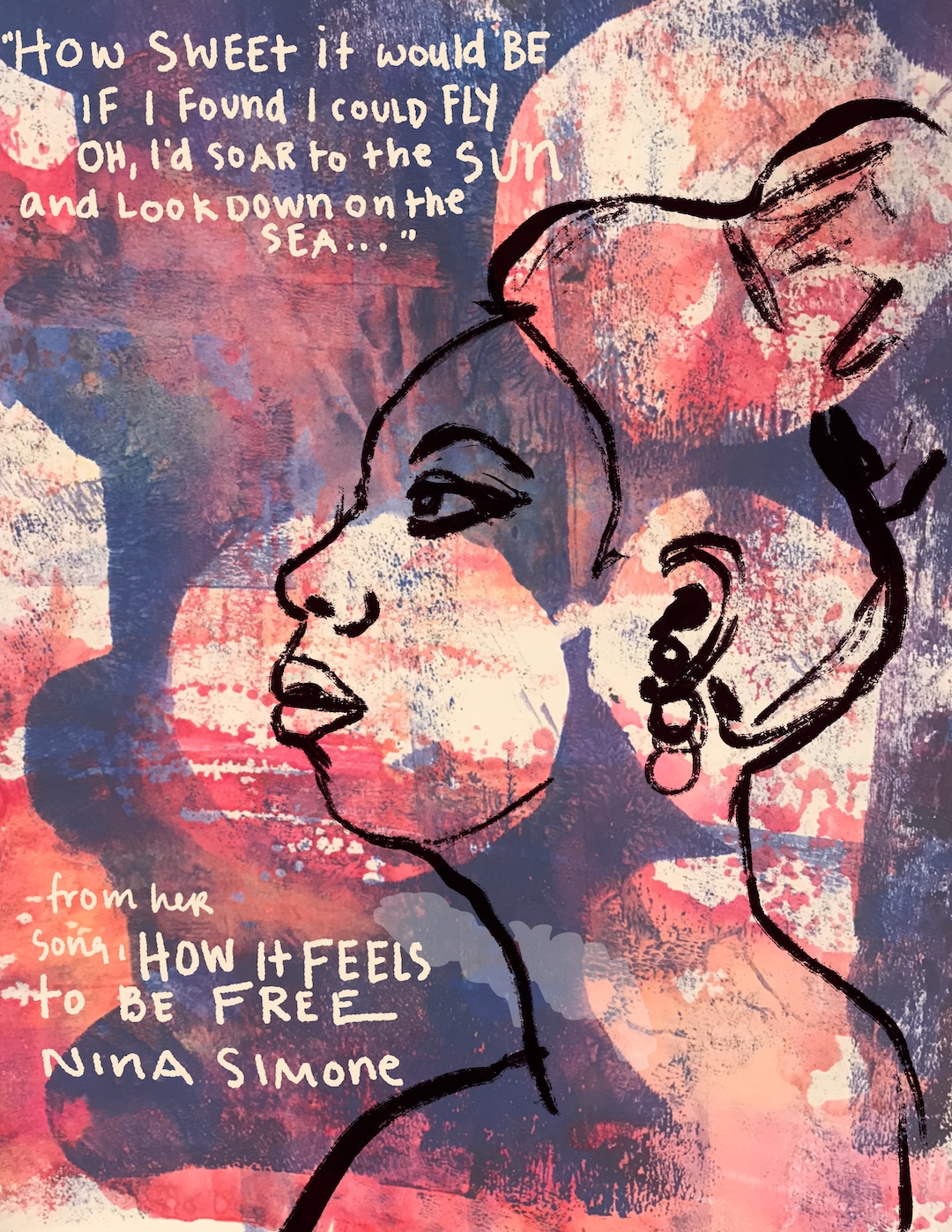
In her film, How it Feels to Be Free, Yoruba Ritchen shows how six Black entertainers saw themselves as free, powerful, liberated women long before society – and Hollywood – shared their view.
By seeing themselves as free, and centering that belief in their performances, deeds and words, they helped to remake society’s view of Black women.
Ritchen tells the stories of Nina Simone, Abbey Lincoln, Pam Grier, Diahann Carrol, Lena Horne and Cicely Tyson. She shows how each of these women stood up against Hollywood’s history of racist depictions of Black people.
- Lena Horne had a contract in which she insisted that she would not play maids – which meant that Hollywood didn’t know what to do with her.
- Cicely Tyson was one of the first Black women to wear her hair un-straightened on TV and only accepted roles that depicted Black people with dignity and respect.
- Diahann Carroll played Julia, a middle-class nurse raising her son after her husband’s death, and brought a new vision of the power and strength of Black women into Black and White households.
- Abbey Lincoln reinvented herself from a glamourous pin-up to a powerful, Afro-wearing jazz singer naming, singing, and speaking about the international struggle of Black people.
- Nina Simone wrote songs and told stories of deeds of terror against Black people in songs such as Mississippi Goddamn.
- And Pam Grier played a death-defying super bada** woman – further extending and defying notions of Black womanhood.
All of these women experienced backlash as a result of their bravery, boldness and principles.
They often didn’t have work for years at a time. But rather than focus on the tragedy of their stories, filmmaker Yoruba Ritchen explains that her goal was to share the importance of these women to our culture, politics and lives.
Check out the trailer here. The film is available on PBS with membership and on Amazon Prime.
You can watch an interview between director Yoruba Ritchen and Cornelius Moore here. The program is presented by the Museum of the African Diaspora Film Club.
And the book that inspired Yoruba Ritchen, How It Feels to Be Free, Black Women Entertainers and the Civil Rights Movement, by Ruth Feldstein is here.