Social justice writing happens in the intersection between what’s going on in the world and your vision of what a just outcome would be.
As someone who’s always written, and who cares deeply about the world we live in, I find myself looking for ways to combine my writing practice that explores what’s going on inside me with writing that takes stock of what’s happening in the world. I didn’t understand at first how to tie what went on inside of me with what went on outside of me. I think that’s true for so many of us. It somehow seemed simpler to look outside and write about what I see, or look inside and write about what I feel.
So I’ve been thinking a lot about what it means to do social justice writing. Say you’re thinking about health insurance and you think about the fact that there are people who don’t have health insurance because they don’t have a job, you might start exploring what would be possible. Does it have to be that way? Are there people who do it differently? What would it look like to make sure that everyone had the health insurance, coverage and ability to get the care they need – not just when they’re sick, but to keep them healthy? If you start writing about that, thinking about it on the page, then that’s what I would consider social justice writing.
Social justice writing is writing on the page that gets the mind to think about what’s possible in a different way.
Imagination. Writing has a role to play in cultivating your own imagination and the imagination of others. Why focus on writing that envisions the world that you want to see? A world that is more just, a world that honors and cultivates all of us, regardless of where we come from or how much we have. A world that takes stock of the wrongs that have been committed and thinks imaginatively about how to right those wrongs. It’s not simple though, never simple, there’s discomfort when we think about these things, the gap between what is and what we’d like to see.
What’s social justice writing? Writing that imagines a world in which all of us are treated fairly, with care and compassion, our potential encouraged – through the allocation of resources such as time, money, attention – to flourish.
Social justice writing imagines this world on the page. Provokes thought, meanders with curiosity. Tantalizes us with what’s possible.
Social justice writing encourages social justice thinking, social justice talking, social justice dreaming, social justice designing, social justice actions, and then a social justice world. Obviously social justice writing is not the only thing that’s needed, but it’s part of what is needed to envision and express the change we want to see.
Social justice writing fuels the imagination that makes possible the public policies, inventions, structures and actions that make change happen.
Social justice writing is the idea of writing about what moves the soul and connecting it to morality, to values, to decency, to the beloved community, to what can be, while identifying what is and what has been, not hiding from the history, not hiding from our part in it and talking about it. This is writing that looks at the periphery, reminding people what can be and how we can in fact design something different. We embrace our imagination while weaving in that which is. We embrace our imagination and what is by drawing, thinking, writing, talking, and then we begin again.
Here are a few writing books that I’ve found helpful as I think about writing about social justice issues in a way that engages both mind and heart.
Undoing the Silence: Six Tools for Social Change Writing, by Louise Dunlap. And her website: https://louisedunlap.net/. There is much to love in her writing book, from ideas on generating new content, to tools for critical thinking, to ways of embracing your full self as you use writing to contribute to social justice. Inspiring.
They Say, I Say: The Moves that Matter in Academic Writing, by Gerald Graff and Cathy Birkenstein. Yes, the authors are writing to help students understand how to engage in academic writing, but I find their explanations and templates very helpful for people who are wanting to engage in op-ed writing, and I’ve used the text when teaching op-eds. I love that the authors make explicit that writing is a conversation with others. There are a few different versions, some of which include writing by other authors. Here’s a link to the book: https://wwnorton.com/books/9780393631678.
Remembered Rapture: The Writer at Work – this is bell hooks writing about writing – why she does it, what it means to her, and key moments in her intellectual development. bell hooks is an author who is in deep connection with all matter of texts, including written texts, film texts, her own history, church texts. Hooks is an incredible thinker, rebel, feminist theorist and prolific author who has written over three dozen books and numerous essays.
Portable Writer’s Mentor by Priscilla Long provides great insight into how to nurture your writing practice and move the work into publication. I wish that I’d read this book sooner, because she talks about how to organize and track your work, structure that would have served me well 15 years ago when I was writing creative non-fiction and poetry seriously, and submitting work for publication. But guess what, now is what I’ve got!
When I was researching Priscilla, I saw that she’s written a series of short essays combining science and poetry – a testament to following your interests and artfully sharing what you’ve learned on the page: https://theamericanscholar.org/the-complete-science-frictions/
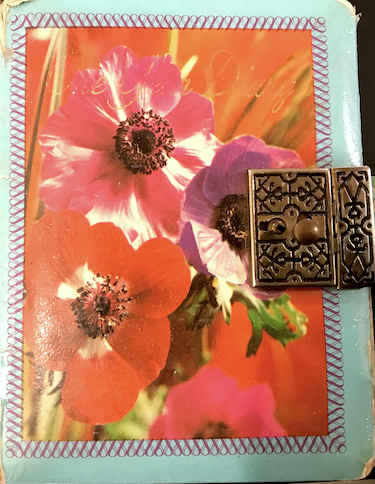
I love to write. I’ve journaled since I was 9 years old, and I actually have that first journal (you can see it in the photo above), with the little lock and key that my mom gave me. Unfortunately, I wrote in pencil and much of it has smeared, alas. I chuckle to remember one of my writing goals at the time – take notes on the things that my mom did that I wanted to make sure that I didn’t do when I had kids. Clearly, righting wrongs and continuous improvement have been a focus of mine for a very long time.
I owe writing so much of who I am and where I am.
There’s the very concrete stuff – my jobs since I graduated college have been in the field of communications. But there’s also the intangible – writing to feel and writing to know & think. Writing has helped me to know who I am, what’s most important to me, to figure out where I want to go, and who I want to be. Writing has helped me to see when I’m not living up to my values and challenged me to do better, to be better.
Writing is a process, a way of thinking and if you’re not writing to yourself, you’re leaving a vital source of knowledge untapped.
I love to do something that’s called free writing. I’ve also heard it called automatic writing. It’s when you set a timer for 7 – 15 minutes and just write. Sometimes I have a topic that I’m writing about, and sometimes I don’t.
Free writing is a way to get some language out – consider it clay – which you then inspect to learn what you’re thinking about but probably didn’t even know you were thinking about. So I go through the result of the free writing to see what’s emerged.
It’s not the only way of knowing, but it’s a very valuable tool. And then the beautiful thing is that you can go back and make connections – you can track yourself and your line of thought.
One of my favorite ways to gather my thoughts is to make a mind map.
What is a mind map?
It’s a visual representation of your thoughts. Mind maps are radial. They spread out over your page, circles and rectangles connected by lines, a mapping of the connections between ideas. Unlike lists, which are linear, mind maps are non-sequential. They look like inky representations of tree branches connected to nodes.
When I’m stuck, I’ll often draw a mind map by placing my topic in a circle in the center of the page, then writing words around the main topic. I usually put those ideas in circles too, then take each word and brainstorm from there, drawing lines to connect ideas.
So how do you make a mind map?
There are plenty of resources out there to show you how, and at the end of this post, I’ll provide some links. One of the most passionate advocates for mind maps is Tony Buzan, and he provides very prescriptive guidance for making a mind map, which can be quite helpful. Some folks call mind maps clustering, like Gabriele Ricco whose book Writing the Natural Way is quite helpful, and there are other folks who call them tree diagrams. You can go as deep as you’d like.
I like to start out by writing in the middle of the page, the central idea that’s on my mind, and then I write down an idea that connects to it, draw a circle around that idea, and then think about what connects to the new idea, and put that next.
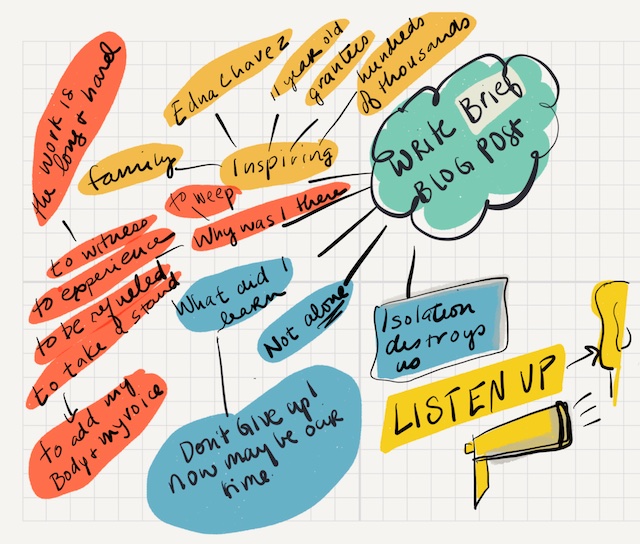
This is a mind map I drew when my head and heart were full of ideas and feelings after the March for Our Lives in March 2018.
I find that mind maps help me to organize my feelings as much as my thoughts.
After the March for Our Lives, I was full up. The speeches, the young people speaking out, the mass of people, the signage, the energy as more than 800,000 people came together to call for policy shifts that would bring an end to mass shootings. It was a lot, and I needed to pull it together to draft copy to share.
I made the mind map that you see here, and as I wrote and drew circles (I used color to distinguish clusters), I felt a sense of relief and then I felt a click. I know what I want to say. I know how I want to organize it, and the copy flowed from me.
So what about you? What’s filling you up that you want to see on the page? Take some paper – I’ll often use 11X17 paper, or I’ll do it on my ipad, make a circle in the center of the page for your main idea, and just let the ideas flow. Use color, doodle, and be open the connections that may arise between nodules. Then start again.
Here are some mind mapping resources for further exploration:
Tony Buzan is widely credited as the creator of mind maps, and offers very specific guidance on how to maximize your use of mind maps. Here’s a link to the Tony Buzan Learning Resource Centre where you can learn more.
And here’s an article on clustering, which is similar to mindmapping, and a process created by writer and writer instructor Gabriele Rico:
Listening to your needs helps you identify what you most value.
I worked with a client who was feeling frustrated in her new position. “Why did they bring me in if they weren’t going to heed my recommendations, if they weren’t going to listen to me?” she said. As we explored, she got clear that she had a need to be listened to, her unique perspective respected, and her contributions recognized.
When I showed her a list of needs and values, she recognized that one of her most important values was making a contribution. With that value acknowledged, she could approach her frustration differently. She gained spaciousness and awareness that she could talk to her colleagues honestly and candidly about her value of making a contribution – not just for herself, but for others, and the organization as a whole.
I’ve noticed for myself and my clients that tuning into frustrations and needs leads directly to identifying values. Identifying values becomes fuel for the work ahead.
So often we feel embarrassed about needing something. Even the phrase, being too needy, reminds us that we don’t want to need anything too much. But noticing, and even savoring our needs, allows us to get closer to understanding what matters to us and what motivates us.
Here are some questions that you can ask yourself when you are trying to figure out what you need:
What do you need?
What is missing for you?
What need is connected to your frustration?
What is even more important that stops you from creating what you want?
Take some time to journal, to walk, to sit quietly and explore your needs.
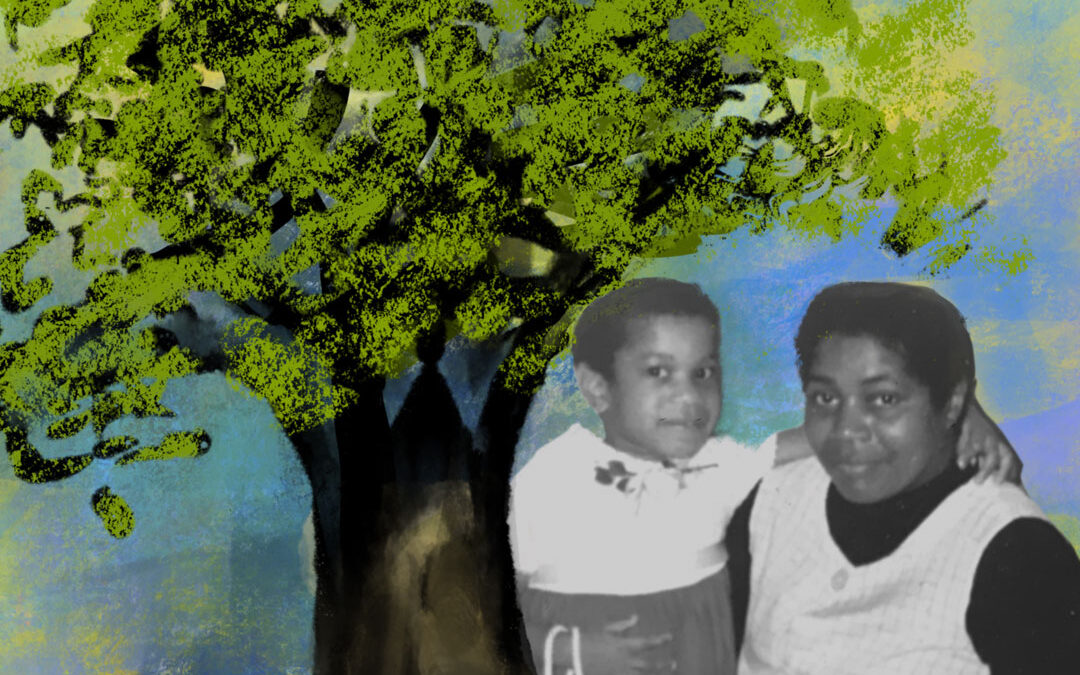
When I was growing up in Philadelphia, there was a sycamore tree in our backyard. My mom and I would sit out on the back steps to enjoy the shade and comfort of that big huge tree whose branches extended over the yards of the neighbors to either side of us.
She would often sing to me when we sat together. And one of her favorite songs was one written by Joyce Kilmer – an ode to trees. “I think that I shall never see a poem as lovely as a tree, a tree whose hungry mouth is prest against the earth’s sweet flowing breast . . .” You can read the full poem here.
My mom taught me to love trees, to see them as divine, to protect them and to be comforted by them. To this day, long after my mother has passed, my spirit and soul feels nourished, cared for and replenished when I am in the presence of trees.
How do you care for yourself and nourish your spirit?