I often hear clients express doubt about their capabilities and identify feeling like imposters.
During a recent session, a client talked about feeling pressed to have all the answers. After all, they explained, they had advanced education, and were deemed to be an expert in their field, so if someone asked a question, it stood to reason they should have the answer.
Believing they had to know all the answers because they were an expert in their field was putting profound pressure on them.
Together we explored the question, “What does it actually mean to be an expert?”
Interestingly, the word expert has the same Latin roots as the words experience and experiment. They all come from the Latin word experiri, which means “try.”
When I put ‘expert’ next to the words experience, experiment and try, I feel very differently about the word expert.
I see the possibilities inherent in the word – the possibilities to try and try again, to experiment, to learn from trial and error, to bring the spirit of indefatigable curiosity and wonder.
Instead of giving me the image of an ossified know-it-all, the word expert holds the freshness of mistakes and insights ever evolving.
During the course of our session, my client also reawakened their sense of wonder, and reclaimed the idea of expert as meaning they could be a questioner, rather than someone who always has the answers. They could draw upon years of study and scholarship to make connections, and cast light on ideas that others with less experience might miss.
In the end, they left the session feeling more powerful and willing to respond to people who ask questions by saying, “I don’t know, let’s explore it together.”
I was talking with a client about the things that excite her and drain her. She had a general idea of what those things were, but noticed that she wasn’t quite sure.
What if she could hunt her excitement, carefully noticing what made it ebb and what made it flow? How would that create new opportunities and awareness for her?
I woke up the next morning and drew an excitement tracker. She tried it out for a couple weeks, creating visual trails of her particular excitement signature. Some of what she learned surprised her.
What about you? What if you tracked your excitement for 5 days? What would you notice about what you want more of and less of?
Try it out and let me know. Here’s the tracker for you, just click on the image to download a copy:
Follow these four steps to engage your audience & spark action.
One of the things that I do as a leadership coach and a longtime communications professional, is create and help others to create, powerful and engaging presentations. Over the years I’ve learned that there are four crucial steps you want to follow to engage your audience and create a talk that they will remember.
1. Be crystal clear about your main message.
Your first step, before you do anything else, is to answer these questions:
What are you presenting and why?
What’s the one thing you want this person to walk away from your presentation with?
What’s the insight you want them to have, the feeling you want them to experience, and the question you want them to ponder?
If they were to talk to someone about what they heard, what would you want them to pass on?
What do you want them to do after they hear your presentation? Do you want them to write differently, talk differently, vote differently? What do you want to have happen?
2. Don’t be the expert.
Once you are clear on your message and what you want to convey, then your next step is outlining your content. Remind yourself that while you’re the person presenting, you don’t have to have all the answers. And even if you do have all the answers, you don’t want to tell them everything you know.
When you try to tell people everything, you’re not giving them space to think, to pause, to reflect on what you’re saying and consider what it means to them. You’re not giving them space to bring their own knowing and experience to the conversation.
It’s especially tempting when you’re teaching people something. How easy it is for us to get into the banking mindset – I have all of this information and I just have to deposit it in these folks. For me, when I’m teaching, I can get caught up in wanting to make sure that people are getting value. I have this voice in the back of my mind saying, “If I tell them a lot then they’re going to have something concrete.”
But I have been learning through working with a coach focused on instructional design, as well as monitoring my own processes, that we need to take in new information in chunks, and then we need a process for making sense of those chunks and figuring out how we might use the new information.
3. Remember that questions & comments are just as important as your declarations.
So when presenting or teaching, include questions on your slides. Include pauses in your delivery and let people share what’s coming up for them, what they’re noticing, connections that they’re making and experiences that they’ve had.
4. Create slides with more pictures and less words.
Resist the temptation to fill your slides with text. When you put a ton of words on a slide, people focus more on the slide and trying to read it, rather than paying attention to what you’re saying. The miss your mannerisms, your movements, your tone of voice and all those other delicious bits that folks need to notice if they really want to understand your message.
And in terms of font size, try not to use fonts smaller than 20 points, unless you’re creating slides that are designed to be hand-outs that people read on their own.
Here are two great resources on creating presentations: Susan Weinchenk, a psychologist, shares 5 Things Every Presenter Needs to Know About People in this short video:
and Guy Kawasaki, venture capitalist (and Apple’s chief evangelist in the 80’s), describes his 10/20/30 rule:
Well, I just told my sweetheart that I have writer’s block. There’s something that poet William Stafford used to say that I find super helpful. He said he didn’t believe in writer’s block, “There is no such thing as writer’s block for writers whose standards are low enough.”
He compared the process of writing to fishing, an activity in which he had to be receptive and willing to fail.
“If I am to keep writing, I cannot bother to insist on high standards…. I am following a process that leads so wildly and originally into new territory that no judgment can at the moment be made about values, significance, and so on…. I am headlong to discover.” – William Stafford
Now let me tell you, this is from someone who wrote a LOT. William Stafford wrote at least 20,000 poems, of which about 6,000 were published.
So, I take his words to mean that part of the reason that I’m blocked is because I have created this bar that I have to reach. It’s in my head and it’s high! Just looking up at this bar has me feeling super intimidated and unable to even start.
Taking Stafford’s advice to lower my standards gets me moving again.
Another trick, that is helping me right now, is that I use a timer. I just have to write for 15 minutes and it doesn’t matter if it’s junk. Lowering my standards gives me permission to write. And then in the process of writing the junk, I start to see what I have to say.
One of the biggest mistakes we make, is thinking that we have to know what we’re going to say before we start writing.
It’s odd, because something is usually pulling at us, which is one of the reasons we’re wanting to put some words down on the page – but we never know what we’re going to end up with. There is this sense of being willing to be in the dark. We have to feel our way through the actual writing, laying the words on the page, or making the marks and drawing the images.
We have to be willing to see what emerges.
We have to remember that all we need to do is sit down, start writing with lowered standards, a timer ticking away, and with the faith that even though we don’t know exactly what we want to say, by writing, just writing, and then rereading what we’ve written, we’ll uncover our message.
We have to trust ourselves.
That’s another thing that I’ve been thinking about – this notion of imposter syndrome. I think one aspect of it is that we haven’t learned to trust our voices, we haven’t learned to trust our minds, our way of thinking.
One of the best ways to learn to trust your mind is to write for yourself. To journal.
And you can journal in a way that is very much about interacting with others. In other words, you can hear someone say something at work that annoyed you and you can write about what annoyed you, and why you were annoyed and what you would have liked to see happen instead.
At a recent training, one of the participants shared that sometimes she feels like people are not willing to hear her – that they see her as too assertive when she opens up and speaks. My heart broke hearing her say that. At the same time though, I thought about how important it is to make a space for our own voices, both with other people and with ourselves.
It’s important that we practice speaking our curiosities and wonderings with people we already trust and know want to hear us, because they are interested in, and curious about who we are and what we have to say. But it’s also important to make space for our voices in our own hearts and minds.
We can do that through writing first, then sharing with others we trust. Continually building that muscle, so that when we need to speak in territory that is hostile — whether overtly or covertly — our voice will be strong, certain and clear, whether or not it is heard, whether or not it is heeded.
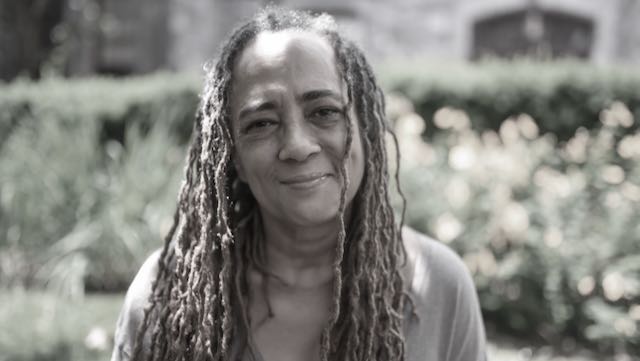
An Interview with Denise Brown, Executive Directorof the Leeway Foundation in Philadelphia, PA.
The Leeway Foundation supports women, trans and non-binary artists and cultural producers working in communities at the intersection of art, culture, and social change.
Sande: What do you know now about leadership that you wish you knew when you became the executive director of Leeway?
Denise Brown: I always say, if it was easy, everybody would do it. I’ve learned that there’s a difference between Denise the individual and Denise the executive director of Leeway.
As the executive director I have to think in terms of what it means to the organization to move in certain ways. I have to be more cautious than I would be as an individual.
I’ve come to understand that sometimes, who I am in my role is in conflict with who I am as a person. I want to be clear that it’s not a deep conflict, because there’s a strong alignment around values, but it’s the difference between moving as an individual and moving as someone who’s accountable and responsible to an organization, its members, and its communities.
Both therapy and coaching have been helpful to me in adjusting to this role. I’ve worked with various coaches with different specialties.
Another thing that was challenging was the way in which this role separates you from others.
Yes, you’re going to have collegial relationships with staff. You can be collaborative. But at the same time, there are things that you have to hold confidentially. For example, sometimes there are people you care deeply about who are not successful in their positions. And you have to work through that.
I also find it’s important to make it clear to my staff when I’m invested in a decision, and when I’m not.
Typically, I want my staff to feel empowered to make decisions. Since I’m someone who talks to think and explore possibilities, I want to be sure they know when I’m sharing my perspective and experience for the purpose of thinking together versus the few things that I want to be consulted on for a final decision.
Sande: What does it mean to ask for help in your role? Who do you turn to?
Denise: There are certain members of the board who become my thought partners around certain aspects of my job. There’s someone who is my go-to when I’m trying to work through programmatic kinds of issues. The board chair is the person I go to when I think there are ethical issues or other things that might have a deeper impact on the organization. And I consult with other board members for other questions. Their support and guidance is very valuable.
I also have my group of peers that I go to for support and to talk about what’s happening, people who are in the trenches in similar roles. I had to learn how to lean into that, because I’m someone who often held things in.
I’ve worked on building trust and engaging with my community, sharing what I need and what’s going on with me.
Sande: How are you leading through change?
Denise: Grace is the word that comes up. COVID has pushed all of us in a lot of ways. At the beginning with COVID, it was all hands on deck, figuring out together what we’d have to cancel, how we would move everything to a new environment. We had to think through our alternatives, and it was challenging because Leeway is built to be a physical, community kind of space, centered on interacting with people. And then suddenly everything had to be on Zoom.
We started with offering grants of up to a $1,000 to people who had previously received grants from Leeway. And then because we wanted to be able to serve as many people as possible, we changed it to $2,500. Our Relief Fund became the thing we’re most proud of, given how quickly we were able to get it up and running.
In some ways many of our jobs changed. They got bigger or redirected. I’ve struggled because I function and perform the best in physical space with people. I like to sit across a table with someone and look them in the eye, have awareness of their body language and nuance and respond to that. I’ve lost all those cues.
I’ve had to let go of things and ways of being, so that I can respond to the moment we’re in.
I often say I have four planets in Scorpio, so I’m fixed in a lot of ways. But this job has moved me to a place where I am open to changing. I’ve learned to take the space I need to reflect on a situation and think about how to shift things.
You have to be willing to learn how to navigate change in ways that help maintain your curiosity, I think curiosity is foundational to continuing to grow and engage and to learn.
So, there are times when I say to myself, I need to reconnect to my curiosity right now. And not build a relationship on a set of assumptions or expectations that may not be valid. The challenge in taking on a leadership role like this is that you have to be willing to shift.
Sande: How does racial justice play into your leadership practices?
Denise: When I started at Leeway, I was the only woman of color running a foundation in the region. There were people who had bigger portfolios as individual program officers, but they were not the head of the organization. So that privilege of being able to create a culture around being a Black woman, meant it was important to engage folks who would not traditionally have access to a place like this. That was part of why we re-framed who Leeway supports to focus on people from what is traditionally termed marginalized communities.
Early on, I made a set of choices about hiring practices. In terms of racial justice, it was a conscious decision to hire, BIPOC, trans, and non-binary folks who would not traditionally have access to working in a foundation.
This meant I often hired people who didn’t have experience. As a result, we’ve had a robust internship program with interns from 20 to 45, who want to gain foundation experience. Some of those interns have gone on to become staff people. Some have gone on to do other really remarkable things.
Having a board of directors that is majority people of color, they come with a variety of experiences that are an important part of centering racial justice.
Most of our board members have received grants from Leeway. That’s important because they represent the community that we support and are engaged with. They have relationships in the community, and they extend our reach.
One of the things that is interesting about this time at Leeway is our footprint is much larger than our bank account would merit. We’re a regional arts funder, that typically gives away less than $500,000/year. (This year we’ll probably give away about $600,000.) That’s because, in addition to grantmaking, we put a lot of money into supporting applicants to get a grant from Leeway and then leverage that grant for something else. We helped them learn about writing grants because that’s also part of our process.
At Leeway, relationships are everything and we’re only able to have the footprint we have, and to be seen in the ways that we are seen, because of those relationships. We see our work of leading change as building those networks and relationships.
I can’t say exactly how it happened, but because of developing relationships amongst peers over the last decade plus, we have become part of a national conversation, even an international conversation about art and change. And being part of that larger conversation was also tied to decisions we made.
For example, we knew that we didn’t just want to build relationships with other funders and folks in Philadelphia, instead, we made it a point to build relationships with people who had practices at the intersection of art, culture and social justice.
We were very intentional about finding our people and building those relationships over time.
I’m willing to talk about our practice wherever I’m invited because the goal is to get as many people as possible interested in doing work at the intersection of art, culture and social justice.
With organizations like Leeway the idea of being in community with each other is a real core value.
Working remotely has messed with that dynamic. While I know it’s going to be hard to get people back in the office, I am really committed to the idea that being in community best supports the work that we do.
I feel blessed, grateful and lucky to have had the opportunity to be Leeway’s Executive Director. I think of the ways in which I’ve grown personally – the confidence, sense of possibility and personal power I’ve developed have been remarkable, and it threads through my life.
Doing this work every day has made me think about what I really care about and what matters to me. What are the things I’m going to fight about, and what can I let go of?
Sande: Thank you Denise. It was such a joy to speak with you.