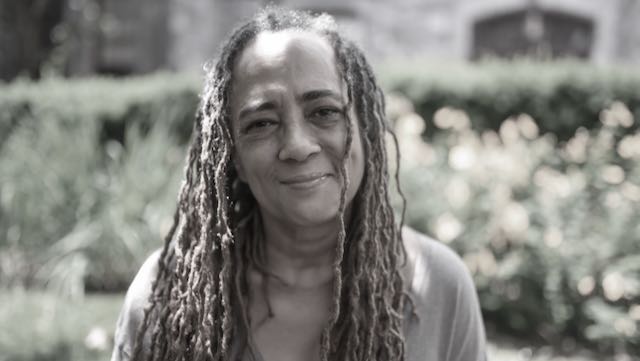
An Interview with Denise Brown, Executive Director of the Leeway Foundation in Philadelphia, PA.
The Leeway Foundation supports women, trans and non-binary artists and cultural producers working in communities at the intersection of art, culture, and social change.
Sande: What do you know now about leadership that you wish you knew when you became the executive director of Leeway?
Denise Brown: I always say, if it was easy, everybody would do it. I’ve learned that there’s a difference between Denise the individual and Denise the executive director of Leeway.
As the executive director I have to think in terms of what it means to the organization to move in certain ways. I have to be more cautious than I would be as an individual.
I’ve come to understand that sometimes, who I am in my role is in conflict with who I am as a person. I want to be clear that it’s not a deep conflict, because there’s a strong alignment around values, but it’s the difference between moving as an individual and moving as someone who’s accountable and responsible to an organization, its members, and its communities.
Both therapy and coaching have been helpful to me in adjusting to this role. I’ve worked with various coaches with different specialties.
Another thing that was challenging was the way in which this role separates you from others.
Yes, you’re going to have collegial relationships with staff. You can be collaborative. But at the same time, there are things that you have to hold confidentially. For example, sometimes there are people you care deeply about who are not successful in their positions. And you have to work through that.
I also find it’s important to make it clear to my staff when I’m invested in a decision, and when I’m not.
Typically, I want my staff to feel empowered to make decisions. Since I’m someone who talks to think and explore possibilities, I want to be sure they know when I’m sharing my perspective and experience for the purpose of thinking together versus the few things that I want to be consulted on for a final decision.
Sande: What does it mean to ask for help in your role? Who do you turn to?
Denise: There are certain members of the board who become my thought partners around certain aspects of my job. There’s someone who is my go-to when I’m trying to work through programmatic kinds of issues. The board chair is the person I go to when I think there are ethical issues or other things that might have a deeper impact on the organization. And I consult with other board members for other questions. Their support and guidance is very valuable.
I also have my group of peers that I go to for support and to talk about what’s happening, people who are in the trenches in similar roles. I had to learn how to lean into that, because I’m someone who often held things in.
I’ve worked on building trust and engaging with my community, sharing what I need and what’s going on with me.
Sande: How are you leading through change?
Denise: Grace is the word that comes up. COVID has pushed all of us in a lot of ways. At the beginning with COVID, it was all hands on deck, figuring out together what we’d have to cancel, how we would move everything to a new environment. We had to think through our alternatives, and it was challenging because Leeway is built to be a physical, community kind of space, centered on interacting with people. And then suddenly everything had to be on Zoom.
We moved quickly to create a Window of Opportunity COVID Relief Fund.
We started with offering grants of up to a $1,000 to people who had previously received grants from Leeway. And then because we wanted to be able to serve as many people as possible, we changed it to $2,500. Our Relief Fund became the thing we’re most proud of, given how quickly we were able to get it up and running.
In some ways many of our jobs changed. They got bigger or redirected. I’ve struggled because I function and perform the best in physical space with people. I like to sit across a table with someone and look them in the eye, have awareness of their body language and nuance and respond to that. I’ve lost all those cues.
I’ve had to let go of things and ways of being, so that I can respond to the moment we’re in.
I often say I have four planets in Scorpio, so I’m fixed in a lot of ways. But this job has moved me to a place where I am open to changing. I’ve learned to take the space I need to reflect on a situation and think about how to shift things.
You have to be willing to learn how to navigate change in ways that help maintain your curiosity, I think curiosity is foundational to continuing to grow and engage and to learn.
So, there are times when I say to myself, I need to reconnect to my curiosity right now. And not build a relationship on a set of assumptions or expectations that may not be valid. The challenge in taking on a leadership role like this is that you have to be willing to shift.
Sande: How does racial justice play into your leadership practices?
Denise: When I started at Leeway, I was the only woman of color running a foundation in the region. There were people who had bigger portfolios as individual program officers, but they were not the head of the organization. So that privilege of being able to create a culture around being a Black woman, meant it was important to engage folks who would not traditionally have access to a place like this. That was part of why we re-framed who Leeway supports to focus on people from what is traditionally termed marginalized communities.
Early on, I made a set of choices about hiring practices. In terms of racial justice, it was a conscious decision to hire, BIPOC, trans, and non-binary folks who would not traditionally have access to working in a foundation.
This meant I often hired people who didn’t have experience. As a result, we’ve had a robust internship program with interns from 20 to 45, who want to gain foundation experience. Some of those interns have gone on to become staff people. Some have gone on to do other really remarkable things.
Having a board of directors that is majority people of color, they come with a variety of experiences that are an important part of centering racial justice.
Most of our board members have received grants from Leeway. That’s important because they represent the community that we support and are engaged with. They have relationships in the community, and they extend our reach.
One of the things that is interesting about this time at Leeway is our footprint is much larger than our bank account would merit. We’re a regional arts funder, that typically gives away less than $500,000/year. (This year we’ll probably give away about $600,000.) That’s because, in addition to grantmaking, we put a lot of money into supporting applicants to get a grant from Leeway and then leverage that grant for something else. We helped them learn about writing grants because that’s also part of our process.
I don’t know if you know, but Leeway just received a $2,000,000 grant from MacKenzie Scott and Dan Jewett. That was just announced recently.
At Leeway, relationships are everything and we’re only able to have the footprint we have, and to be seen in the ways that we are seen, because of those relationships. We see our work of leading change as building those networks and relationships.
I can’t say exactly how it happened, but because of developing relationships amongst peers over the last decade plus, we have become part of a national conversation, even an international conversation about art and change. And being part of that larger conversation was also tied to decisions we made.
For example, we knew that we didn’t just want to build relationships with other funders and folks in Philadelphia, instead, we made it a point to build relationships with people who had practices at the intersection of art, culture and social justice.
We were very intentional about finding our people and building those relationships over time.
I’m willing to talk about our practice wherever I’m invited because the goal is to get as many people as possible interested in doing work at the intersection of art, culture and social justice.
With organizations like Leeway the idea of being in community with each other is a real core value.
Working remotely has messed with that dynamic. While I know it’s going to be hard to get people back in the office, I am really committed to the idea that being in community best supports the work that we do.
I feel blessed, grateful and lucky to have had the opportunity to be Leeway’s Executive Director. I think of the ways in which I’ve grown personally – the confidence, sense of possibility and personal power I’ve developed have been remarkable, and it threads through my life.
Doing this work every day has made me think about what I really care about and what matters to me. What are the things I’m going to fight about, and what can I let go of?
Sande: Thank you Denise. It was such a joy to speak with you.
This interview is part of my Defining Leadership: Conversations with Women Leaders series.