A practice is a doing that supports a new way of being.
People come to me for coaching because they are burned out, stretched thin and wanting to realign their lives with what they value most. Or they are seeking greater clarity and confidence in actualizing the potential they know they have. They want to change and shift some aspect of their lives.
To make a lasting change in our lives requires an intentional practice.
Why is a practice so important? Because it gives us a way to pause, and notice with new eyes. Having an intentional practice provides us with a way to interrupt old patterns.
This practice can take many forms, depending on what resonates with you and what you can commit to. I recommend small steps, starting with practices you can do in 15 minutes or less. This helps builds new habits while addressing the fear and pressure of not having enough time.
What kinds of things might you do to support yourself in a practice? You might write, or you might journal. You might walk. You might breathe. You might do yoga. What keeps these things from just being things you do? What takes them into the realm of practice? It’s the separation from outcome.
Practice Implies Curiosity
You are learning what you love. It’s a safe space that you create, that’s private, where you can allow yourself freedom from demands and judgment. For example you could have a sound practice, where you are just making noises with your voice or an instrument. You enter into a mindset of curiosity.
Let your judge take the backseat. Practice is a space for discovery and learning, making visible to yourself what matters to you.
At minimum you need a practice that supports pausing. I also recommend cultivating a reflection and a creative practice. Here are three practices you can explore.
Pausing Practice
A pausing practice can be breath. Simply three breaths in which you’re paying attention to the breath, in which you’re fully present.
A pausing practice can also be checking in with yourself, noticing the sensations in your body, where you’re hot, cool, constricted, relaxed. You could pause and look around the room you’re in, and notice the objects you see, the sounds you hear.
The pause gives a little space to interrupt the ongoing loop of doing, doing, doing without stopping. Here are some more pausing exercises you can try.
Reflection Practice
The reflecting process gives you an opportunity to get to know yourself, to look at how you are approaching things and ask questions that give you a new perspective.
There’s a process called recapitulation in which you spend a couple of minutes before you go to bed where you replay the day in your mind as if you’re watching a movie.
What I like about this practice is that it gets you to look at the day as a whole instead of ruminating on specific things that happened. You pull back and you look at the whole day and ask yourself what are you noticing.
You can also use this practice after meetings or important events – what happened, what did I notice, what did I feel, what did I think, what was hard, what was easy, what are my takeaways.
A reflection practice allows you distance from the details. You can ask yourself is there something I might do differently? Is there another way to approach this? Or YES, I want to do more of this!
Creative Practice
And then, there’s creative practice. What in the world is that? Creative practice is magic. What I have found is creative practice is a cauldron where you make something from nothing – you take bits and pieces and you put something together.
This can be words that you cut up from a magazine or book and put together in a new way, it can be images, it can be drawings of your own. You’re entering into a conversation with something that wasn’t there before.
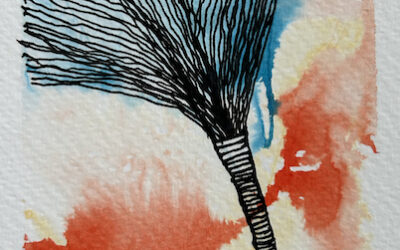
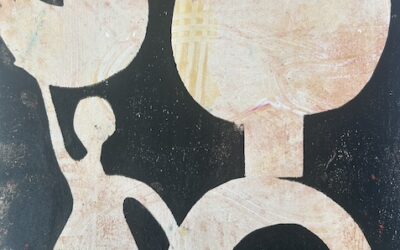
My creative practice takes the form of visual journaling. That means I write, paint, draw, I glue things down and make images. And those images be ugly and messy and gorgeous and odd and surprising – it doesn’t matter. They are created in a space of not knowing.
Visual journaling means I allow my hand to take the lead, not my mind. It allows me to practice feeling a yes. Ah yes, I’m going to draw these lines. Oh yes, I’m going to draw these circles, and when I cut this picture out of the magazine, I’m going to glue it here – without knowing what the end product will look like.
Ultimately, I have found pausing, reflecting and creative practices to be nourishing.
In addition to interrupting old patterns, they feed our new way of being and support who we are becoming.